
Finding evidence of a raccoon in your crawl space can be unsettling. You may hear scratching beneath the floor, notice a strong odor, or discover damaged insulation without ever seeing the animal.
Crawl spaces are attractive to raccoons because they provide shelter, warmth, darkness, and protection from weather and predators. Once a raccoon finds a way inside, it may use the space for resting or nesting and can create problems for the rest of the home.
So, what should you do if you think a raccoon is living under your house?

The safest approach is to identify how the animal entered, determine whether it is actively using the crawl space, and have it removed without trapping or separating animals unnecessarily. The entry point should then be repaired to reduce the chance of another wildlife problem.
How Do You Know If a Raccoon Is in Your Crawl Space?
You may not see the raccoon itself. In many cases, homeowners first notice noises or damage.
Common signs include:
- Scratching, thumping, or movement beneath floors
- Noises that become more noticeable at night
- Damaged or displaced insulation
- Strong or unusual odors
- Droppings or concentrated waste in one area
- Disturbed soil or nesting material
- Damaged ductwork, wiring, or vapor barriers
- Holes or torn screening around the crawl space
- Mud, dirt, or paw marks near an opening
- Repeated wildlife activity around the foundation
A single noise does not necessarily mean a raccoon is present. Rats, mice, squirrels, opossums, and other animals can also enter crawl spaces and create similar sounds.
The animal should be identified before choosing a removal method.
Why Do Raccoons Get Into Crawl Spaces?
Raccoons are opportunistic animals. If a building offers a protected space that is easy to access, they may use it as temporary shelter or a nesting location.
Common reasons raccoons enter crawl spaces include:
- Protection from extreme weather
- A quiet place to rest
- Shelter for raising young
- Easy access through damaged screens or vents
- Openings around foundations
- Gaps beneath porches or additions
- Food sources around the property
Once a raccoon discovers a reliable shelter, it may continue returning unless the underlying access point is addressed.
Our guide to common entry points raccoons use to enter Chicago homes explains some of the less obvious areas homeowners should check.
Can a Raccoon Damage a Crawl Space?
Yes. A raccoon may cause both direct and indirect damage while using a crawl space.
Potential problems include:
Damaged Insulation
Raccoons may disturb, tear, or compress insulation while creating a nesting area. Damaged insulation can reduce its effectiveness and may need to be evaluated after the animal is removed.
Damaged Wiring
Wildlife activity can expose or damage electrical wiring. Any suspected electrical damage should be inspected by a qualified professional.
Torn Screens and Barriers
A raccoon can enlarge an existing opening or damage screening around crawl-space vents and access areas.
Damaged Ductwork
If HVAC components are accessible, wildlife activity can potentially damage flexible ducts or insulation surrounding them.
Contamination
Droppings, urine, nesting material, and other waste can accumulate where an animal has been staying. The longer the animal remains, the more extensive cleanup may become.
Are Raccoons in a Crawl Space Dangerous?
Raccoons are wild animals and should not be approached, cornered, or handled.
The risk is particularly important if a raccoon feels threatened or if a mother is protecting young. Attempting to trap or remove the animal yourself can result in bites, scratches, or an animal escaping into another part of the house.
There can also be sanitation concerns from accumulated wildlife waste.
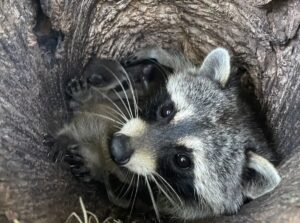
If you find a raccoon inside a crawl space, keep people and pets away from the area and avoid disturbing the animal until you can determine the safest next step.
What If There Are Baby Raccoons in the Crawl Space?
This is an important consideration.
A female raccoon may choose a crawl space as a protected place to raise her young. If you hear repeated movement or chattering from beneath the floor, there may be more than one animal present.
Removing an adult without checking for babies can leave young animals behind. The mother may also attempt to find another way back inside.
For this reason, a professional wildlife inspection should determine whether young are present before removal or exclusion work begins.
Should You Seal the Crawl Space Opening Immediately?
Not if you believe a raccoon is still inside.
Sealing the opening without confirming that the animal has left can trap it inside the crawl space. If babies are present, it can also separate them from the mother.
A better approach is to:
- Identify the suspected entry point.
- Determine whether the crawl space is currently occupied.
- Check for young animals.
- Allow the animal to leave safely when appropriate.
- Prevent re-entry.
- Repair the opening permanently.
The goal is not simply to block the hole. It is to solve the wildlife problem without creating another one.
How Is a Raccoon Safely Removed From a Crawl Space?
Professional wildlife removal typically starts with an inspection rather than immediately placing a trap.
The process may include:
1. Inspecting the Crawl Space
The technician looks for signs of activity, nesting areas, damage, droppings, and possible entry points.
2. Identifying the Animal
Raccoons can share crawl spaces with other wildlife, so identifying the species helps determine the appropriate approach.
3. Checking for Young
If there is evidence of a nesting female, the removal strategy needs to account for the young.
4. Removing the Raccoon
The appropriate removal method depends on the animal’s behavior, location, access conditions, and circumstances at the property.
5. Addressing the Entry Point
Once the animal has safely left, vulnerable openings should be repaired or secured to prevent another raccoon from getting inside.
6. Checking for Damage
The crawl space should be inspected for damaged insulation, wiring, ductwork, vapor barriers, and other components.
7. Cleanup and Follow-Up
Where necessary, contaminated materials and nesting debris may require cleanup. Follow-up inspection can also help confirm that the animal has not returned.
Professional raccoon removal in Chicago can help address both the immediate wildlife problem and the access points that allowed the animal inside.
How Much Does Raccoon Removal From a Crawl Space Cost?
The cost depends on the circumstances rather than simply the type of animal.
Factors that can affect the price include:
- Location and accessibility of the crawl space
- Number of entry points
- Whether babies are present
- Extent of damage
- Removal method
- Exclusion or repair work
- Cleanup requirements
- Follow-up visits
A raccoon that has briefly entered through one damaged screen can require a very different solution from an established nesting situation.
For a broader overview of pricing factors, see our guide to the cost of wildlife removal in Chicago.
How Can You Keep Raccoons Out of Your Crawl Space?
After removal, prevention is one of the most important steps.
Homeowners can reduce the likelihood of another raccoon entering by:
- Repairing damaged crawl-space screens.
- Securing foundation openings.
- Checking vents and access doors.
- Repairing gaps beneath porches and additions.
- Keeping garbage containers tightly closed.
- Removing accessible outdoor food sources.
- Cleaning up fallen fruit from trees.
- Avoiding leaving pet food outside overnight.
- Checking the foundation periodically for new openings.
Do not simply seal every opening without first confirming that no wildlife remains inside.
Can Raccoons Come Back After Removal?
Yes, particularly if the original access point remains open.
Removing the animal addresses the immediate problem, but it does not necessarily prevent another raccoon from discovering the same shelter.
Proper exclusion and repairs are therefore an important part of long-term wildlife prevention. Our guide on how raccoon removal helps prevent future wildlife problems explains why addressing access points is just as important as removing the animal.
When Should You Call a Wildlife Removal Professional?
Consider professional help if you:
- Hear repeated movement beneath the floor.
- Find signs of nesting.
- Discover a damaged crawl-space screen.
- Smell a strong animal odor.
- See a raccoon entering or leaving the crawl space.
- Find droppings or other wildlife waste.
- Suspect babies are present.
- Have already attempted removal without success.
- Cannot safely access the crawl space yourself.
Professional assistance is particularly important when the animal is trapped, injured, aggressive, or located in an area that connects directly to the living space.
Frequently Asked Questions
How do I know if the animal in my crawl space is a raccoon?
Large scratching or movement sounds, disturbed insulation, strong odors, droppings, and larger openings around the foundation can indicate raccoon activity. However, other wildlife can create similar signs, so identification should be confirmed before removal.
Can a raccoon live under my house?
Yes. Crawl spaces, areas beneath porches, and other enclosed sections of a home can provide shelter for raccoons, especially when they can enter and leave easily.
Will a raccoon leave a crawl space on its own?
It may leave temporarily to search for food, but that does not mean it has abandoned the area. If the crawl space remains accessible, the animal may return.
Should I use a trap to remove a raccoon myself?
DIY trapping can be risky and may not address the underlying problem. You also need to consider whether young animals are present and what will happen after the raccoon is removed.
Can raccoons damage insulation?
Yes. Raccoons may disturb or tear insulation while creating a nesting or resting area. The condition of the insulation should be evaluated after the animal has been removed.
How do I prevent raccoons from returning?
The most effective prevention combines removing attractants with repairing the openings the animal used to enter. Crawl-space vents, foundation gaps, screens, and access doors should all be checked.
How long does raccoon removal take?
The timeline depends on whether the animal is currently inside, whether young are present, how accessible the crawl space is, and how much exclusion or repair work is required.
Raccoon in Your Crawl Space? Get Professional Help
A raccoon under your home can cause more than nighttime noise. Extended activity may lead to damaged insulation, contamination, structural problems, and repeated attempts to enter the property.
The safest solution is to identify the animal, determine whether it is nesting or raising young, remove it appropriately, and then address the entry point so another raccoon cannot easily get back inside.
Chicago’s Green Trappers provides professional wildlife removal services for homeowners dealing with raccoons in crawl spaces, attics, and other areas of the home. If you suspect a raccoon is living beneath your house, contact Chicago’s Green Trappers to arrange an inspection and discuss the safest removal and prevention options.