
Hearing unusual squeaking, scratching, or fluttering sounds coming from your attic? Noticing dark stains near the roofline or small piles of droppings around your attic access? These signs may indicate that bats have established a roost inside your home.
Attics can provide bats with quiet, protected spaces where they can rest during the day and, in some cases, raise their young. Small openings around roof vents, soffits, fascia boards, chimneys, and other exterior features may give them access without being easily noticed from inside the house.
For Chicago homeowners, discovering bats in an attic can raise concerns about property contamination, unpleasant odors, and potential health risks. The challenge is that a bat colony may remain hidden for a long time before its presence becomes obvious.
Understanding the warning signs, possible damage, and proper removal process can help you address the problem safely and prevent bats from returning.
Why Do Bats Choose Attics in Chicago Homes?
Bats generally look for sheltered locations where they can rest during daylight hours and remain protected from weather and predators. Although natural roosting locations include trees, caves, and other sheltered spaces, buildings can also provide suitable conditions.

Attics Offer Shelter and Protection
An attic is often quiet and receives little regular human activity. Small spaces beneath roof structures, behind insulation, and around roof features can provide bats with protected roosting locations.
Small Roof Openings Provide Easy Access
Bats can enter through surprisingly small openings. Gaps around roof vents, soffits, chimneys, gable ends, and damaged exterior materials may create access points.
Illinois public health guidance notes that openings greater than approximately one-quarter inch can provide potential access for bats. Even openings that appear insignificant from the outside deserve attention.
Seasonal Roosting and Maternity Colonies
Some Illinois bat species form maternity colonies during spring and summer. Female bats may gather in suitable roosting locations to give birth and raise their young.
Attics can become attractive locations when they offer the shelter and conditions bats need. Some bats may also use buildings for winter roosting or hibernation.
Warning Signs of a Bat Colony in Your Attic
Bats are nocturnal, so homeowners may not see them during the day. Instead, their activity often becomes noticeable around dusk, overnight, or through evidence left near their roosting locations.
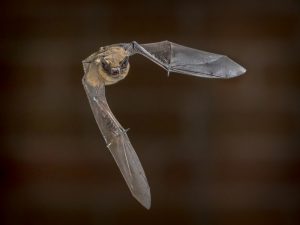
Bats Flying Around Your Roof at Dusk
One of the clearest signs of a possible colony is seeing multiple bats leaving your roofline around sunset.
Watch the exterior of your home from a safe distance as daylight fades. Look for bats emerging from:
- Roof vents and attic openings.
- Gaps beneath soffits and fascia boards.
- Gable ends and roof intersections.
- Chimney gaps and damaged flashing.
- Small openings near the roofline.
Repeated activity from the same location may indicate an established roost inside the building.
Bat Droppings Around the Attic
Bat droppings, commonly called guano, are one of the more noticeable signs of an attic roost.
You may find small, dark droppings beneath rafters, near roof openings, around insulation, or on attic surfaces. Accumulated guano may form concentrated piles below frequently used roosting locations.
Bat droppings can resemble mouse droppings, so identification should not rely on appearance alone. Other evidence, such as bats entering and leaving the same opening, can help determine the source.
Avoid touching, sweeping, or vacuuming suspected bat droppings. Disturbing accumulated material can create airborne dust and potential exposure risks.
Scratching, Squeaking, and Fluttering Sounds
Bats may produce sounds that homeowners notice from bedrooms or rooms directly below the attic.
Possible signs include:
- Soft squeaking or chattering.
- Fluttering or movement near roof spaces.
- Repeated sounds around sunset or before sunrise.
- Activity coming from the same ceiling or attic area.
Bats are not typically responsible for heavy chewing or gnawing sounds. If you hear loud scratching or notice chewed wood, wiring, or other materials, another animal, such as a rodent or squirrel, may be involved.
Dark Stains Around Roof Openings
Look for dark or greasy-looking marks near small openings along the roofline.
These marks may develop where bats repeatedly enter and exit. Oils and dirt from their bodies can leave rub marks around frequently used access points. Droppings may also accumulate beneath these areas.
Staining alone does not confirm a bat colony, but it can help identify locations that need closer inspection.
Persistent Odors in the Attic
A strong, unpleasant smell may develop when droppings and urine accumulate in an enclosed attic space.
The odor may become more noticeable during warm weather or when attic ventilation is limited. A dead bat or other animal inside a concealed area can also produce an unpleasant smell.
If the odor persists, an inspection can help identify the source rather than assuming it is caused by bats.
What Damage Can Bats Cause in a Chicago Attic?
Bats generally do not chew wood, electrical wiring, or building materials like rats and mice. However, a colony that occupies an attic over time can create sanitation, odor, and maintenance problems.
Guano Accumulation and Contamination
Repeated use of the same roosting location can lead to droppings accumulating on attic surfaces.
Large or long-term accumulations may contaminate insulation, flooring, stored belongings, and other materials. Cleanup can become more involved when droppings have collected in difficult-to-reach areas.
Contaminated Attic Insulation
Guano and urine may contaminate insulation beneath frequently used roosting areas. Depending on the extent of contamination, affected insulation may require professional assessment, cleaning, or replacement.
Simply removing the bats does not automatically resolve contamination left behind.
Persistent Odors
Accumulated droppings and urine can create unpleasant odors that remain noticeable after bats have left.
In some situations, the smell may spread into nearby areas through gaps, ventilation pathways, or ceiling openings.
Potential Health Concerns
Bats can carry rabies, and direct contact should always be avoided. A bite or scratch may not be immediately obvious, so any suspected exposure should be taken seriously.
Accumulated bat or bird droppings can also create conditions associated with histoplasmosis. The risk is particularly relevant when contaminated material is disturbed and airborne particles are inhaled.
Homeowners should avoid entering heavily contaminated attic spaces or attempting extensive cleanup without appropriate protective measures and professional guidance.
Where Do Bats Hide and Enter Chicago Attics?
Finding the actual entry points is essential to resolving an attic bat problem. Bats may use small exterior openings that are difficult to notice without a careful inspection.
Roof Vents and Gable Vents
Damaged screens, loose vent covers, and gaps around ventilation structures can provide access to attic spaces.
Soffits and Fascia Boards
Loose soffits, separated fascia boards, and gaps where roof sections meet exterior walls can create protected openings.
Chimneys and Roof Intersections
Uncapped or poorly protected chimney openings and gaps around roof intersections may provide access to sheltered areas.
Damaged Roofing and Flashing
Loose shingles, damaged flashing, and deteriorated roofing materials can leave small openings along the roofline.
Gaps Around Exterior Utility Openings
Openings around certain utility lines and exterior construction joints may also provide access to concealed building spaces.
A complete inspection should examine the entire roofline and exterior rather than focusing only on the area where bats have been seen.
Is One Bat in Your Attic a Sign of a Colony?
Not necessarily. Finding one bat does not automatically mean an established colony is living in your attic.
A single bat may enter accidentally through an open window, chimney, or exterior gap. However, repeated sightings, multiple bats leaving the same roof opening, accumulated guano, and recurring sounds may indicate a larger roost.
It is important to distinguish between an individual bat entering an occupied room and a colony living in a non-living space such as an attic.
If you find a bat inside your living space, avoid touching it and keep people and pets away. Contact your local health department or animal control for guidance, particularly if someone may have had direct contact with it.
For more guidance, see what to do if a bat gets inside your house at night.
How Is a Bat Colony Removed From a Chicago Attic?
Bat removal requires a different approach from ordinary rodent control. Bats are protected wildlife in Illinois, and their removal must follow applicable state regulations.
The goal is to allow bats to leave safely, prevent re-entry, and address the openings that made the attic accessible.
Inspect the Attic and Exterior Entry Points
A proper inspection should identify:
- The locations where bats are roosting.
- The number and condition of potential entry points.
- Signs of guano and urine accumulation.
- Roof vents, soffits, chimneys, and other access areas.
- Whether bats may be using more than one opening.
Watching the exterior around dusk can help identify active exit points.
Follow Illinois Bat Exclusion Regulations
Permanent bat eviction in Illinois is subject to seasonal restrictions and specific conditions.
Under Illinois guidance, standard permanent eviction periods include March 15 through May 15 when the required temperature conditions are met, and August 5 through October 30 when young bats are capable of flight and the applicable conditions are satisfied.
The maternity period is particularly important. Flightless young bats may remain inside an attic while adult bats leave to feed. Excluding the adults too early can leave the young trapped inside.
Other situations outside the standard periods may require consultation with the Illinois Department of Natural Resources and appropriate permits.
Homeowners should not assume that sealing an opening or installing a one-way device is permitted at any time. A qualified professional familiar with Illinois requirements should determine the appropriate approach.
Install Appropriate One-Way Exclusion Devices
When conditions and regulations allow, one-way exclusion devices can be installed at identified exit points.
These devices allow bats to leave the structure but prevent them from returning through the same opening.
The process requires identifying all active access points. If some openings are missed, bats may continue using alternative routes.
Seal Remaining Entry Points
After the bats have safely left and the exclusion process is complete, remaining openings should be sealed with suitable materials.
Common areas requiring attention include:
- Roof and gable vents.
- Gaps beneath soffits and fascia.
- Chimney openings.
- Damaged flashing and roofing sections.
- Exterior construction gaps.
Sealing should be completed at the correct stage of the exclusion process, not simply by closing every visible opening while bats may still be inside.
Clean and Address Contaminated Attic Materials
Once the bats have been excluded, the condition of the attic should be assessed.
Depending on the amount of accumulated guano and urine, the work may involve removing contaminated materials, cleaning affected surfaces, and evaluating insulation.
Heavy contamination may require specialized cleanup procedures to reduce exposure to airborne particles.
Why DIY Bat Removal Can Create More Problems
Trying to remove bats without understanding their behavior and the applicable regulations can make an existing problem worse.
Sealing Openings Too Early
Closing an active entry point before all bats have left can trap animals inside the attic, walls, or other concealed spaces.
Disturbing a Maternity Colony
Excluding adult bats while their young are still unable to fly can leave pups trapped inside. This can result in animal welfare concerns, odors, and additional cleanup requirements.
Missing Hidden Entry Points
Bats may use more than one opening. Sealing only the most visible gap may not prevent them from returning.
Attempting Unsafe Cleanup
Handling bats or disturbing accumulated droppings without appropriate precautions can expose homeowners to health risks.
Professional inspection and a properly planned exclusion process are generally safer than attempting to handle an attic colony independently.
How to Prevent Bats From Returning to Your Chicago Attic
Once a colony has been safely excluded, prevention becomes important for protecting the property.
Repair Roof and Exterior Openings
Inspect roof vents, soffits, fascia boards, chimney openings, and exterior joints. Repair damaged screens and close suitable gaps after confirming that no bats remain inside.
Maintain Chimney Caps and Vent Screens
Properly fitted chimney caps and durable vent screens can reduce access through common roofline openings.
Inspect the Roofline Regularly
Look for loose roofing materials, damaged flashing, separated soffits, and other exterior defects that may create new entry points.
Arrange Periodic Wildlife Inspections
A periodic inspection can help identify deteriorating exterior materials and potential access points before they become a larger problem.
For additional prevention advice, see how to keep bats out of your home in Chicago.
When Should You Contact a Professional for Bat Removal in Chicago?
Consider arranging a professional inspection if:
- You regularly see bats leaving the same roof opening.
- You find accumulated droppings in your attic.
- You hear repeated squeaking or fluttering sounds near the roof.
- You notice dark stains around soffits, vents, or roof gaps.
- You detect persistent odors coming from attic spaces.
- You suspect a colony has been present for an extended period.
- Previous exclusion work has not prevented bats from returning.
A professional can help identify the species where necessary, inspect the structure, assess the extent of the roost, and determine an appropriate exclusion approach under Illinois regulations.
Frequently Asked Questions About Bats in Chicago Attics
How can I tell if I have a bat colony in my attic?
Repeated bat activity around the same roof opening, droppings beneath roosting areas, dark rub marks, and recurring squeaking or fluttering sounds can indicate a colony. A professional inspection can help confirm the source.
Do bats return to the same attic every year?
Some bats show site fidelity and may return to familiar roosting locations when suitable conditions remain. If an attic is not properly excluded and entry points remain accessible, the property may continue attracting bats.
Can bats damage attic insulation?
Yes. Accumulated guano and urine can contaminate insulation beneath roosting areas. Depending on the extent of contamination, affected materials may require professional cleaning or replacement.
Do bats chew through roof wood or electrical wiring?
Bats do not typically chew wood or electrical wiring. If you notice gnaw marks, damaged wires, or shredded materials, rodents or other animals may be responsible.
Is bat guano dangerous inside an attic?
Accumulated bat droppings can create sanitation concerns. Disturbing contaminated material may release airborne particles associated with histoplasmosis exposure. Avoid sweeping or vacuuming droppings and seek appropriate cleanup guidance.
Can I seal the holes where bats enter my attic?
Not while bats may still be inside. Sealing openings too early can trap bats and their young. Proper exclusion should identify all access points and follow applicable Illinois regulations.
What time of year can bats be removed in Chicago?
Illinois has specific periods and conditions for permanent bat eviction. Standard periods include March 15 through May 15 and August 5 through October 30, subject to temperature and other requirements. Special circumstances outside those periods may require IDNR consultation and permits.
How much does professional bat removal cost in Chicago?
The cost depends on the number of bats, the size and accessibility of the roost, the number of entry points, the exclusion work required, and whether contaminated materials need cleanup. Read more about bat removal cost in Chicago for additional information.
Protect Your Chicago Home From Bat Problems
A bat colony in an attic can go unnoticed until droppings, odors, or repeated activity around the roofline become visible. Addressing the problem requires more than closing an opening or removing an individual bat. The entire roosting area, active entry points, exclusion timing, and potential contamination need to be considered.
If you suspect bats are living in your attic, Chicago’s Green Trappers can help assess the wildlife activity and discuss appropriate removal and prevention options for your property. With experience serving Chicagoland since 1972, the company provides wildlife removal solutions for residential and commercial properties.
Contact a wildlife professional to evaluate the situation and help protect your home from recurring bat problems.