
A garage can provide raccoons with shelter, protection from harsh weather, and access to potential food sources. In Chicago, these animals may enter garages through open doors, damaged weather stripping, gaps around exterior walls, or other overlooked openings. Once inside, they may hide behind stored belongings, nest in quiet corners, or investigate areas where food and garbage are accessible.
Finding a raccoon in your garage can be unsettling, especially if you hear scratching, discover overturned storage containers, or notice damage near the garage door. However, seeing a raccoon outside your property does not necessarily mean it has entered the building.
Recognizing the warning signs and understanding how raccoons access garages can help homeowners respond safely. This guide explains what attracts raccoons to garages, where they hide, what damage they may cause, and when to consider professional raccoon removal in Chicago.
Why Do Raccoons Enter Garages in Chicago?
Raccoons are adaptable wildlife that can live near residential neighborhoods, wooded areas, parks, and urban environments. Garages can become attractive shelter locations when they offer easy access and undisturbed hiding places.

Several conditions may encourage raccoons to investigate a garage:
- Shelter from weather: Garages provide protection from rain, wind, cold temperatures, and other outdoor conditions.
- Accessible food: Pet food, birdseed, garbage bags, and food waste may attract raccoons.
- Quiet nesting locations: Cluttered corners, storage areas, and spaces behind equipment can provide sheltered places to rest.
- Easy access: An open garage door or damaged door seal can create an opportunity to enter.
- Nearby shelter: Overhanging tree branches, fences, sheds, and other structures may allow raccoons to approach the building.
A garage does not need to be dirty to attract wildlife. Even a well-maintained property may have gaps or access points that allow a raccoon to enter.
7 Signs a Raccoon May Be Living in Your Garage
Raccoons are often more active during the evening and nighttime, although they can also move around during daylight hours. Homeowners may notice physical evidence before seeing the animal itself.
Here are some common warning signs to investigate.
1. Scratching, Thumping, or Movement Sounds
Unusual noises coming from behind stored belongings, above the garage ceiling, or near wall cavities may indicate animal activity.
Raccoons can make noticeable sounds while walking, moving objects, scratching, or shifting nesting materials. However, noises alone cannot confirm that a raccoon is responsible. Other wildlife may produce similar sounds.
2. Droppings Around Storage Areas
Raccoon droppings may appear near sheltered corners, along walls, or in areas where an animal repeatedly rests.
Avoid touching or sweeping droppings. Raccoon feces can carry parasites, including the roundworm Baylisascaris procyonis. Contaminated material should be handled carefully, particularly when accumulated in a confined area.
3. Overturned Containers and Displaced Belongings
Raccoons are capable of moving objects while exploring a space. You may find storage containers displaced, bags torn open, or items scattered across the garage floor.
Look for repeated disturbance in one area rather than assuming every overturned object indicates wildlife activity.
4. Damaged Garage Door Seals
One of the first places to inspect is the bottom and side edges of the garage door.
Damaged weather stripping, loose panels, or gaps beneath the door may create access opportunities. A raccoon may investigate these openings while searching for shelter.
5. Torn Insulation or Nesting Materials
If your garage has exposed insulation, stored fabrics, cardboard, or other soft materials, raccoons may disturb or rearrange them.
Shredded insulation, displaced materials, and debris in a sheltered corner can indicate nesting activity.
6. Unusual Odors
A persistent animal-like odor may develop when wildlife repeatedly occupies an enclosed space. Accumulated droppings, urine, nesting materials, or a dead animal can contribute to unpleasant smells.
Odors alone are not enough to identify the animal, so inspect for additional evidence.
7. Direct Raccoon Sightings
Seeing a raccoon inside the garage is the clearest indication that one has entered the building.
Do not approach it, attempt to corner it, or try to pick it up. Give the animal space and keep children and pets away from the area.
How Do Raccoons Get Into Garages?
Raccoons do not always need a large opening to investigate a building. They can use existing structural gaps, damaged doors, and openings around exterior features.
The following are common access points homeowners should inspect.
Gaps Beneath Garage Doors
A garage door that does not close properly can leave enough space for wildlife to enter. Worn rubber seals, uneven flooring, and damaged door panels may contribute to these gaps.
Damaged Side Doors and Entry Doors
Loose door frames, broken weather stripping, and doors that do not latch securely can create additional access points.
Check the condition of all exterior doors, including smaller pedestrian doors leading directly into the garage.
Roofline and Exterior Wall Openings
Raccoons can climb and investigate elevated parts of a building. Damaged soffits, loose fascia, and openings near rooflines may provide access to connected attic or wall spaces.
For homeowners who notice activity above the garage, it may be worth investigating whether the problem extends beyond the garage itself.
Vents and Utility Openings
Gaps around vents, pipes, cables, and other utility connections can create opportunities for wildlife to enter enclosed building spaces.
Inspect these areas for damaged covers, loose materials, and openings that should be professionally sealed.
Connections Between Garages and Other Structures
Attached garages may share walls, ceilings, or utility spaces with the main house. If raccoons enter through an exterior opening, they may potentially access connected areas where openings are present.
This is one reason a complete inspection can be more useful than simply checking the garage floor.
What Attracts Raccoons to Your Garage?
Access points explain how raccoons enter, but food and shelter can encourage them to remain nearby.
Common attractants include:
- Pet food stored in accessible bags or containers
- Birdseed and bird-feeding supplies
- Garbage and food waste
- Open recycling containers with food residue
- Cluttered storage areas
- Water sources from leaking pipes or containers
- Unsecured outdoor storage and sheds
Remove accessible food sources, secure garbage, and keep storage areas organized. These steps can make the property less attractive to raccoons, although they will not resolve an existing infestation by themselves.
What Damage Can Raccoons Cause in a Garage?
A raccoon entering a garage may initially appear to be a minor nuisance. However, repeated activity can result in property damage and sanitation concerns.
Damage to Insulation and Stored Materials
Raccoons may pull apart insulation, move cardboard, and disturb stored belongings while searching for shelter or nesting locations.
Damage Around Doors and Building Openings
Wildlife investigating an entry point may disturb loose materials or worsen existing damage around doors, vents, and exterior openings.
Electrical and Utility Concerns
Raccoons may disturb exposed wiring and other building materials while moving through enclosed spaces. Damaged wiring should be assessed by a qualified electrician.
Droppings, Urine, and Contamination
Accumulated waste can contaminate surfaces and stored belongings. Raccoon feces may contain parasite eggs, including those associated with raccoon roundworm.
Do not dry sweep or vacuum suspected raccoon droppings. Avoid disturbing contaminated material and seek appropriate professional cleanup advice, particularly when waste has accumulated.
What Should You Do If You Find a Raccoon in Your Garage?
Discovering a raccoon inside your garage can create an immediate safety concern. The safest approach is to avoid direct contact and allow a qualified wildlife professional to assess the situation.
Follow these precautions:
- Keep your distance: Do not approach, corner, or attempt to handle the raccoon.
- Keep children and pets away: Prevent them from entering the garage or approaching the animal.
- Avoid blocking its movement: Do not attempt to trap the raccoon inside a small area or force it into another part of the building.
- Do not attempt DIY trapping: Improper handling can injure the animal or create a risk of bites and scratches.
- Contact a wildlife professional: Arrange an assessment to determine the animal’s location, access points, and appropriate removal approach.
If a raccoon appears sick, unusually aggressive, or injured, avoid approaching it and seek guidance from the appropriate local animal-control or wildlife authorities.
If anyone is bitten or scratched, wash the wound thoroughly and seek prompt medical advice about rabies exposure and other potential risks.
How to Prevent Raccoons From Entering Your Garage Again
After raccoon activity has been addressed, preventing another entry should become part of your regular property maintenance.
Repair Garage Door Seals
Inspect the bottom and side seals of the garage door. Replace damaged weather stripping and address gaps that may allow wildlife to enter.
Secure Food and Garbage
Keep pet food, birdseed, and other potential attractants in secure containers. Use garbage bins with tightly fitting lids and avoid leaving food waste accessible overnight.
Reduce Clutter
Organize stored belongings and avoid allowing cardboard, fabric, and other nesting materials to accumulate in undisturbed corners.
Keep storage areas accessible so you can inspect them regularly.
Inspect Exterior Walls and Rooflines
Check soffits, fascia, vents, utility openings, and other exterior building components for damage.
Repair vulnerable openings using appropriate materials that can withstand wildlife activity.
Maintain the Area Around Your Garage
Remove unnecessary debris, secure outdoor storage, and keep vegetation from creating convenient access routes to the building.
These preventive measures can reduce opportunities for raccoons to enter, but properties with recurring wildlife activity may require a more detailed inspection.
When Should You Contact a Raccoon Removal Professional in Chicago?
Professional help may be necessary when a raccoon is actively occupying your garage, has created a nesting area, or continues returning despite attempts to secure the property.
Consider arranging an inspection if you notice:
- Repeated raccoon sightings inside or around the garage
- Persistent scratching or movement sounds
- Droppings or nesting materials in storage areas
- Damage around garage doors or exterior openings
- Signs of raccoon activity extending into connected attic or wall spaces
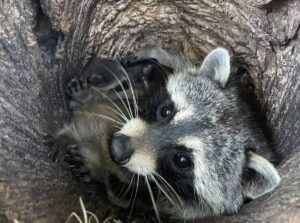
- A suspected mother raccoon with young animals
A professional assessment can help determine where the animal is entering, whether it has established a nesting location, and what removal and exclusion measures are appropriate.
If the activity involves multiple areas of the property, reviewing emergency raccoon removal in Chicago may also help homeowners understand when a more immediate response is needed.
For additional information about recurring wildlife activity, read why raccoons keep returning to the same property in Chicago.
Frequently Asked Questions About Raccoons in Garages
Can a Raccoon Open a Garage Door?
Raccoons can investigate and manipulate some objects, but homeowners should not assume they can operate every garage door. An improperly closed door, damaged seal, or existing gap is a more straightforward access opportunity.
Do Raccoons Nest in Garages?
Yes. Garages can provide sheltered spaces where raccoons may rest or establish a nesting area, particularly when stored materials and undisturbed corners are available.
How Do I Know If a Raccoon Is in My Garage or Attic?
Scratching sounds, droppings, odors, and disturbed materials can indicate wildlife activity in either location. A professional inspection can help identify the animal and determine whether it is occupying the garage, attic, wall cavity, or another connected space.
Should I Leave My Garage Door Open to Let a Raccoon Out?
Do not assume that opening the garage door will safely resolve the problem. The animal may move further into the building, encounter people or pets, or remain inside. Keep your distance and seek professional guidance.
How Much Does Raccoon Removal Cost in Chicago?
The cost depends on factors such as the animal’s location, accessibility, extent of the infestation, required exclusion work, and any cleanup or repairs. For more information, see how much raccoon removal costs in Chicago.
Can Raccoons Return to the Same Garage?
Yes. If the original entry points remain accessible or the property continues to offer food and shelter, raccoons may revisit the area. Proper exclusion and removal of attractants can help reduce the likelihood of recurring activity.
Get Professional Help With Raccoons in Your Chicago Garage
Raccoons can turn a garage into a shelter when they find accessible entry points, food sources, and quiet places to hide. Identifying the signs early, securing potential access points, and addressing the source of activity can help protect your property from further problems.
Chicago’s Green Trappers has served the Chicagoland area since 1972, providing wildlife removal solutions for residential and commercial properties. If you suspect a raccoon has entered your garage, contact a wildlife professional to discuss an inspection and appropriate raccoon removal options.