
Squirrels can turn a small opening along a roofline into an entry point to your attic. Once inside, they may build nests, disturb insulation, chew wood, and damage wiring or other building materials. Even after they leave, an unrepaired opening can allow them—or other wildlife—to return.
In Chicago, seasonal weather changes, aging roof materials, and nearby trees can all contribute to roof access problems. Squirrels may enter through loose soffits, damaged fascia boards, roof vents, gaps around utility lines, or openings where roofing materials have deteriorated.
The solution is not simply to cover every visible hole. A roof must be secured in the right order so that squirrels are not sealed inside the attic or separated from their young.
Effective squirrel-proofing involves identifying entry points, determining whether animals are still inside, allowing them to exit safely when necessary, and repairing vulnerable areas with durable materials.
1. Inspect the Roof for Squirrel Entry Points
Before repairing anything, identify where squirrels may be entering. A hole that looks minor from the ground can connect to a larger space behind the soffit, roof decking, or attic insulation.
Common entry points include:
Damaged soffits and fascia boards
Soffits cover the underside of roof overhangs, while fascia boards run along the roof edge. Wood rot, loose panels, weather damage, or existing gaps can make these areas vulnerable.
Squirrels can enlarge a small opening by chewing around its edges. Look for splintered wood, fresh chew marks, displaced panels, and gaps near roof corners.
Roof and attic vents
Roof vents and gable vents provide ventilation, but damaged covers or weak screening may allow squirrels to enter. Inspect the vent frames and surrounding materials for damage.
Any protective screening should be strong enough to resist chewing and should not obstruct the ventilation the roof system requires.
Roof edges and shingles
Loose shingles, damaged flashing, deteriorated roof decking, and gaps around roof intersections may create access points. Squirrels may exploit these openings or chew nearby materials to enlarge them.
A roofing professional can help determine whether an opening requires structural repair rather than simple patching.
Gaps around pipes, cables, and utility lines
Small openings where pipes, cables, and other utilities pass through exterior walls or roof sections can provide access to enclosed spaces.
Check these areas for missing seals, deteriorated materials, or gaps large enough for a squirrel to investigate or enter.
Chimneys and roof intersections
A damaged chimney cap or gaps where different roof sections meet can create additional entry opportunities. Chimney protection should be appropriately fitted and maintained without interfering with safe ventilation or appliance operation.
If you hear scratching or scurrying above the ceiling, use the guidance in our article on signs of squirrels in the attic and safe removal to help assess the situation.
Safety tip: Inspect the roof from the ground with binoculars whenever possible. Avoid climbing onto a roof or using a ladder in wet, icy, or windy conditions. Damaged roof structures and concealed openings can also create fall hazards.
2. Confirm That No Squirrels Are Still Inside Before Sealing Holes
This is the most important step in squirrel-proofing a roof.
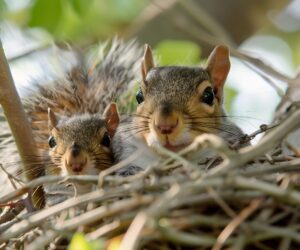
If a squirrel is living in your attic, immediately covering its entry point can trap the animal inside. It may then chew through drywall, wood, or other materials while trying to escape. If a mother squirrel has young inside, sealing the opening could also leave the young trapped in the nest.
Before making permanent repairs, determine whether the opening is actively being used.
Watch for:
- Squirrels entering or leaving the roofline.
- Scratching, scurrying, or chewing sounds in the attic or walls.
- Fresh droppings, nesting material, or disturbed insulation.
- New chew marks around an opening.
- Repeated activity near the same section of the roof.
A lack of visible activity does not necessarily mean the attic is empty. Squirrels may enter and leave when you are not watching, and young animals may remain in a nest even when adults are temporarily absent.
Wildlife Illinois recommends checking whether an opening is still in use before carrying out repairs. One suggested approach is to loosely place newspaper in an opening and check whether it has been disturbed after two or three days. If the material is moved, the entry point may still be active. This is only an indication of activity, not proof that the entire attic is empty.
Read the official Wildlife Illinois guidance on repairing wildlife damage before undertaking repairs.
If you suspect a nest or cannot confidently establish that the animals have left, arrange a professional assessment before sealing the opening.
3. Use Humane Exclusion When Squirrels Are Already Inside
If squirrels are actively occupying an attic, roof cavity, or wall space, the solution may require more than a repair.
Humane exclusion is a method of allowing animals to leave through a designated exit while preventing them from re-entering. Depending on the situation, a qualified wildlife professional may use a suitable one-way exclusion device, followed by permanent repairs once the animals have exited.
The process generally involves:
- Identifying the active entry points and assessing the extent of the problem.
- Checking for nests and dependent young.
- Selecting an appropriate removal or exclusion method.
- Monitoring activity to confirm the animals have left.
- Sealing the entry points and repairing damaged materials.
Not every roof opening is suitable for a one-way device. The location, number of squirrels, condition of the structure, and possibility of young animals all affect the approach.
Avoid sealing every opening except one without understanding how the squirrels are moving through the building. If the remaining opening is not the actual exit, animals may become trapped or create a new opening elsewhere.
Similarly, avoid relying on improvised traps or attempting to relocate squirrels yourself. Illinois has wildlife regulations governing the capture and handling of certain species. Check the applicable requirements and seek qualified help when needed.
If the animals are actively entering the home or causing damage, professional squirrel removal in Chicago can help address the current problem before permanent roof repairs begin.
4. Install Durable Protection Over Roof Vents and Openings
Once you have confirmed that the area is clear, protect vulnerable openings with materials designed for the location and purpose.
Reinforce attic vents
Use appropriately sized, durable metal screening or a purpose-made vent guard where needed. The protective material should resist chewing and be securely attached to a sound frame.
Do not cover vents with materials that restrict airflow. Inadequate attic ventilation can contribute to moisture accumulation and other building problems.
Repair soffits and fascia
Replace rotted or badly damaged sections rather than covering weak wood with a thin patch. Check the surrounding structure for additional damage that may provide another entry point.
Repairs should close access gaps while preserving the roof’s intended ventilation and drainage.
Seal gaps around utility penetrations
Use exterior-rated materials appropriate for the opening, substrate, and building requirements. Larger gaps or damaged structural areas may require professional repair rather than surface sealant alone.
Protect chimneys appropriately
Install or repair a suitable chimney cap when necessary. The cap must be compatible with the chimney and any connected appliance, with appropriate clearance and ventilation.
The goal is to make the roofline resistant to future entry without compromising the building’s ventilation, drainage, or structural integrity.
5. Trim Tree Branches That Provide Roof Access
Overhanging branches can give squirrels convenient access to roofs, gutters, and upper-level openings.
Inspect trees near the house and look for branches that touch the roof or provide an easy route to damaged soffits and vents. Where appropriate, have branches trimmed by a qualified tree-care professional.
Trimming can reduce direct access, but it will not guarantee that squirrels stay off the roof. Squirrels are agile climbers and may reach a building by other routes.
Avoid dangerous DIY tree work, particularly near electrical wires. Do not attempt to install makeshift barriers on utility lines.
For broader prevention advice, see how to keep squirrels out of your Chicago home.
6. Repair Squirrel Damage Before Another Animal Moves In
After the squirrels have safely exited, inspect the affected area for damage. Closing the original opening without repairing the surrounding materials may leave weak spots that squirrels can exploit again.
Check for:
- Chewed or broken soffits and fascia boards.
- Damaged roof vents or screening.
- Loose shingles or deteriorated roof materials.
- Openings around utility lines.
- Damaged insulation or nesting material.
- Chewed wiring or other signs of damage inside the attic.
If wiring appears damaged, avoid touching it and contact a qualified electrician. Roof damage may require a roofing contractor, while contaminated insulation or extensive nesting damage may need specialist cleanup.
The extent of the damage can affect the total cost of resolving a squirrel problem. For a closer look at pricing factors, read squirrel removal from an attic cost in Chicago.
You can also review the cost of wildlife removal in Chicago to understand how the animal involved, access conditions, exclusion work, repairs, and cleanup can influence an estimate.
7. Reduce Conditions That Encourage Squirrels to Return
Roof repairs are essential, but a few additional maintenance steps can help reduce future wildlife access.
Keep the roofline in good condition. Inspect soffits, fascia boards, roof vents, and visible flashing periodically, especially after severe weather.
Keep gutters and roof edges maintained. Clear debris and address damaged sections that may conceal gaps or contribute to moisture damage.
Store rubbish securely. Keep outdoor bins closed and avoid leaving accessible food scraps around the property.
Manage nearby vegetation. Maintain trees and shrubs so they do not conceal roof damage or provide easy access to vulnerable areas.
Check repairs after completion. Look for new chew marks, disturbed screening, or recurring noises. A new opening may indicate that an animal remains inside, that an entry point was missed, or that the repair needs reinforcement.
If you continue to hear movement after the roof has been repaired, do not assume the problem is resolved. Reassess the structure before making additional changes.
Common Squirrel-Proofing Mistakes to Avoid
Several common mistakes can make a squirrel problem harder to resolve.
Sealing an active hole too soon: This can trap squirrels or separate young from their mother. Confirm that the space is clear before permanent closure.
Blocking only the most obvious opening: Squirrels may use more than one entry point or chew through a nearby weak area. Inspect the surrounding roofline as well.
Using weak patching materials: Thin plastic, loose mesh, and poorly secured patches may not withstand chewing or weather exposure.
Blocking ventilation: Screening should protect the opening without restricting the airflow the roof system requires.
Ignoring nesting activity: A quiet attic is not necessarily an empty attic. Consider the possibility of young animals before proceeding.
Treating removal and repairs as separate problems: Removing the squirrel without securing the entry points can lead to another intrusion. Repairing the opening without confirming the animal has left can create a different problem.
A complete solution addresses the animal’s presence, the entry route, and the underlying damage.
When Should You Call a Professional?
Professional assistance is worth considering when squirrels are actively occupying the attic, the entry point is difficult to reach, you suspect young animals are present, or previous repairs have failed.
It is also sensible to seek help when roof damage is extensive, multiple openings are involved, or you cannot determine whether the attic is still occupied.
If squirrels are entering the home repeatedly, a professional assessment can help distinguish an active infestation from a roof-maintenance issue and establish the appropriate next steps.
For urgent situations, see the emergency squirrel removal service in Chicago. If the animal or entry point is uncertain, the broader animal removal services in Chicago page can help you explore the relevant service options.
Frequently Asked Questions
How do I squirrel-proof my roof without trapping squirrels inside?
First, inspect the roofline and determine whether squirrels are still using the openings. If animals are present, arrange appropriate removal or humane exclusion before sealing the entry points. Once the space is confirmed clear, repair damaged materials and install suitable protective screening over vulnerable openings.
What is the best material to keep squirrels out of roof vents?
Durable, securely fastened metal screening or a purpose-made vent guard can help protect suitable openings. The material and mesh size should be appropriate for the vent, and the installation must preserve required airflow. Repair damaged frames rather than relying on screening alone.
Can I seal a squirrel hole if I have not seen the animal for a few days?
Not necessarily. Squirrels may be away from the nest temporarily, and young may remain inside. Look for evidence of activity and consider professional assessment if there is any uncertainty. A short period without visible activity does not prove that the entire space is empty.
Will trimming tree branches stop squirrels from reaching my roof?
Trimming overhanging branches can reduce convenient access, but it cannot guarantee that squirrels will stay off the roof. Combine appropriate vegetation management with roof maintenance and durable repairs to vulnerable entry points.
How much does it cost to squirrel-proof a roof in Chicago?
The cost depends on the location and size of the opening, the condition of the roof, whether squirrels need to be removed, and whether exclusion, structural repairs, or attic cleanup are necessary. A simple repair may require less work than a problem involving an occupied attic and multiple damaged entry points. See our guide to squirrel removal from an attic cost in Chicago for more information.
Should I remove squirrels before repairing roof damage?
If squirrels are still occupying the space, their presence must be addressed before permanently sealing the entry points. The correct approach depends on the animals’ location, whether young are present, and the applicable wildlife requirements. Once the space is confirmed clear, repair the damage promptly to reduce the risk of another animal entering.
Protect Your Chicago Home From Future Squirrel Problems
A squirrel-proof roof starts with a careful inspection, safe removal or exclusion when needed, and durable repairs that address every vulnerable opening. Sealing holes without checking whether animals remain inside can create additional damage, so the order of work matters as much as the materials used.
Chicago’s Green Trappers is a family-owned and operated wildlife removal company serving Chicagoland since 1972. With decades of local experience, the team helps homeowners address wildlife problems, identify entry points, and protect their properties. Free inspections and a lifetime warranty are available, subject to the applicable service terms.
Contact Chicago’s Green Trappers to arrange an inspection and discuss a suitable approach to squirrel removal, exclusion, and roof protection.