
Rats have long been a problem in Chicago, but many homeowners and property owners are noticing more frequent sightings around alleys, garbage areas, yards, garages, basements, and other parts of their properties.
Chicago’s rat problem is not caused by one single factor. Food waste, accessible garbage, shelter, construction activity, building conditions, and easy access to properties can all contribute to conditions where rats survive and reproduce.
The issue continues to receive attention from the city. In July 2026, the Chicago Office of Inspector General reported that its audit of the city’s rat-abatement program found that the response was largely complaint-driven rather than focused enough on addressing underlying causes of infestations. Chicago also maintains a public dataset tracking rat complaints and rodent-baiting requests dating back to 2011.
For Chicago homeowners and property owners, the important question is not simply why rats are being seen. It is what is attracting them, how they are getting onto or inside a property, and what can be done to prevent the problem from continuing.
Why Are Rats Becoming Such a Problem in Chicago?
Chicago provides many of the conditions rats need to survive: food, water, shelter, and access to structures.
The Illinois Department of Public Health explains that long-term urban rodent management generally requires a combination of sanitation, exclusion, and appropriate control methods.
Several factors can contribute to increased rat activity.
1. Easy Access to Food and Garbage
Food availability is one of the biggest reasons rats remain around urban properties.
Open or damaged garbage containers, overflowing trash, food waste, outdoor pet food, birdseed, compost, and poorly maintained dumpster areas can all provide accessible food.
Rats are opportunistic feeders. They do not need a particular type of food to survive, and the Illinois Department of Public Health notes that Norway rats can eat a wide variety of foods.
For homeowners, even relatively small food sources can contribute to activity.
For example:
- Pet food left outside overnight
- Unsecured garbage
- Bird feeders that spill seed
- Food waste around outdoor areas
- Compost that is not properly managed
- Fallen fruit
- Garbage stored in damaged containers
Removing these attractants does not necessarily eliminate an established rat population, but it can make a property less attractive.
2. Rats Have Plenty of Places to Hide
Rats need more than food. They also need places where they can shelter from people, weather, predators, and other threats.
Outdoor clutter, dense vegetation, abandoned materials, gaps around structures, damaged areas near foundations, and poorly maintained areas can provide potential harborage.
Norway rats commonly live in underground burrows but can also move into walls, ceilings, storage areas, and other parts of buildings.
This is one reason simply removing visible rats may not solve the underlying problem.
If suitable shelter remains available, new rats can continue moving into the same area.
3. Rats Can Enter Buildings Through Small Openings
A property does not need to have an obvious hole large enough for a rat to walk through before there is a rodent problem.
The Illinois Department of Public Health recommends sealing openings to prevent rodents from entering buildings and notes that rats can gain access through openings around 1/2 inch across.

Potential entry points include:
- Gaps around pipes and utility lines
- Foundation openings
- Damaged vents
- Gaps around doors
- Garage openings
- Crawl-space access points
- Damaged siding
- Roof or wall openings
- Broken screens
- Gaps around drains or other building penetrations
Once rats find an accessible route into a building, they may move between walls, basements, crawl spaces, storage areas, and other protected locations.
4. Urban Construction and Building Changes Can Disturb Rat Habitats
Chicago is a constantly changing urban environment.
Construction, demolition, utility work, road projects, building renovations, and changes to vacant properties can disturb areas where rodents have been living.
That does not mean construction automatically creates a rat infestation. However, when existing shelter or food sources change, rodents may relocate and look for alternative places to live.
A nearby property can therefore experience increased activity even when the owner has not made significant changes to the building itself.
5. Rats Reproduce Quickly
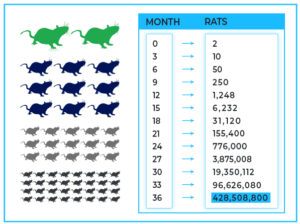
Once rats have access to reliable food, shelter, and water, populations can grow quickly.
According to the Illinois Department of Public Health, Norway rats can have multiple litters per year, with young rats reaching reproductive maturity in approximately three months.
This is why a small number of sightings should not automatically be dismissed as an isolated event.
Seeing one rat does not necessarily prove that an entire property is infested. However, repeated sightings, fresh droppings, burrows, gnawing, or other signs suggest that a closer inspection may be appropriate.
Are Rats a Year-Round Problem in Chicago?
Yes. Chicago’s weather changes throughout the year, but rats can remain active in urban environments during every season.
During warmer months, outdoor food sources, garbage, vegetation, and other conditions can support increased activity.
When temperatures drop, rats may seek warmer and more protected locations around buildings or inside structures.
That is why rats are a year-round problem in Chicago, rather than a pest that disappears completely when temperatures change.
Properties that already provide food, shelter, and access can continue to experience rodent activity regardless of season.
How Do You Know If Rats Are Around Your Property?
Rat sightings are the most obvious warning sign, but they are not the only one.
Property owners should watch for several different indicators.
Rat Droppings
Fresh droppings around food storage areas, garages, basements, walls, cabinets, or other sheltered locations can indicate recent rodent activity.
Gnaw Marks
Rats constantly gnaw to keep their teeth from becoming overgrown. Chewed materials, damaged containers, wood, plastic, or wiring can therefore be signs of activity.
Burrows
Outdoor burrows near foundations, fences, vegetation, debris, or other protected areas can indicate rat activity.
Grease or Rub Marks
Rats often travel along walls and established routes. Repeated movement can leave dark or greasy marks on surfaces.
Scratching and Movement
Scratching, gnawing, or movement inside walls, ceilings, crawl spaces, or other enclosed areas can indicate rodents.
However, not every noise means rats. Squirrels, raccoons, bats, mice, and other wildlife can also enter structures.
If you hear noises in your attic at night, identifying the animal before choosing a removal method is important.
Can Rats Get Inside Your Chicago Home?
Yes.
Rats can enter through openings around foundations, doors, utility penetrations, vents, crawl spaces, garages, and other areas where the building envelope is compromised.
Once inside, they may move through wall voids, basements, storage areas, ceilings, or other protected spaces.
This is why finding and addressing entry points is one of the most important parts of long-term rodent management.
The goal should not simply be to remove the rats that are visible today. The property should also be evaluated for the conditions that allowed them to enter in the first place.
Why Killing One Rat May Not Solve the Problem
A common mistake is to treat a visible rat as the entire problem.
If rats have access to food, water, shelter, or an entry point, removing one or several animals may provide only temporary relief.
Effective rodent management generally requires several steps:
- Identify signs of activity.
- Determine where rats are traveling or nesting.
- Identify food and water sources.
- Locate potential entry points.
- Improve sanitation and reduce attractants.
- Use appropriate control methods.
- Prevent rats from re-entering the structure.
- Monitor the property for continued activity.
The Illinois Department of Public Health describes this broader approach as integrated pest management, combining inspection, assessment, sanitation, exclusion, and appropriate control measures.

How to Prevent Rats Around Your Chicago Property
Prevention starts with making the property less attractive and less accessible.
Secure Garbage
Keep garbage containers closed and in good condition. Clean areas around dumpsters and garbage storage locations regularly.
Store Food Properly
Keep food, birdseed, pet food, and other potential attractants in secure containers.
Remove Outdoor Clutter
Reduce piles of debris, unused materials, dense vegetation, and other areas where rats may find shelter.
Seal Building Openings
Inspect foundations, walls, doors, vents, utility penetrations, garages, crawl spaces, and other potential access points.
Keep Landscaping Maintained
Trim vegetation and avoid creating sheltered areas immediately next to the building.
Watch for Burrows
Look around foundations, sheds, garages, fences, landscaping, and other protected areas for signs of rat activity.
The Illinois Department of Public Health specifically recommends sanitation, proper storage of food and refuse, removal of rodent shelter, and rodent-proof construction as important parts of prevention.
What About Rats in Alleys and Around Dumpsters?
Chicago’s alleys and garbage areas can provide ideal conditions for rodents when food, shelter, and accessible waste are present.
The city tracks rodent complaints and baiting requests through its 311 system, including information about locations where rat activity has been reported.
For individual property owners, however, activity in an alley can become a private-property problem when rats begin entering garages, basements, yards, crawl spaces, or buildings.
This is why property owners should pay attention not only to what is happening inside the building but also to conditions immediately around it.
What Should You Do If You Keep Seeing Rats?
If rats are repeatedly appearing around your property, start by looking for obvious food sources, garbage problems, clutter, burrows, and structural openings.
If activity continues or rats are entering the building, a professional inspection can help determine the extent of the problem and identify potential access points.
A professional rat exterminator in Chicago can evaluate signs of activity and determine what type of control and exclusion approach is appropriate for the property.
This is especially important when rats are entering walls, attics, crawl spaces, basements, garages, or other areas that are difficult to inspect safely.
How Much Does Rat Removal Cost in Chicago?
There is no single price for rat removal because the cost depends on the nature and extent of the problem.
Factors can include:
- Number of rats or signs of activity
- Location of the infestation
- Accessibility
- Whether rats are inside or outside
- Number of entry points
- Required exclusion work
- Property size
- Amount of cleanup or repair required
- Whether follow-up visits are necessary
For a closer look at the factors that can affect pricing, see the guide to rat removal cost in Chicago.
Wildlife and animal removal pricing can also vary considerably depending on the species and circumstances, so property owners should consider the complete scope of work rather than comparing prices based only on an initial treatment.
For a broader explanation of pricing factors, see wildlife removal costs in Chicago.
Is Eco-Friendly Rodent Control Possible?
Rodent control does not have to mean relying on one method.
A well-planned approach can focus first on inspection, sanitation, exclusion, prevention, and appropriate mechanical control, with other control methods considered when necessary.
The Illinois Department of Public Health recommends evaluating the safety, cost, environmental effects, and effectiveness of available control methods as part of integrated pest management.
Property owners interested in lower-impact approaches can learn more about eco-friendly rodent control options and how prevention and exclusion can reduce dependence on repeated treatments.
When Should You Call a Professional?
Professional help is worth considering when:
- Rats are repeatedly visible around the property.
- You find fresh droppings.
- Rats are entering the building.
- You hear repeated scratching or gnawing.
- You find burrows near the foundation.
- Food or stored materials have been damaged.
- You find signs of rats in walls or ceilings.
- DIY control has not solved the problem.
- You cannot identify where the rats are entering.
- Rat activity is affecting a business, rental property, or multi-unit building.
Chicago’s municipal code also gives city inspectors authority to inspect buildings and parcels for evidence of rat harborage, infestation, or openings through which rats may enter.
For homeowners and property managers, the key is to address the underlying conditions rather than waiting until the problem becomes extensive.
Frequently Asked Questions About Chicago Rat Problems
Are rats increasing in Chicago?
Chicago continues to deal with significant rat activity, and the city’s rat-abatement program remains an ongoing public concern. A 2026 Chicago Office of Inspector General audit found that the city’s response relied heavily on complaint-driven activity and recommended greater attention to underlying causes.
However, rat activity varies by neighborhood and property. A general increase in attention or complaints should not be interpreted as proof that every Chicago neighborhood has experienced the same level of increase.
Why are there so many rats in Chicago?
Food waste, garbage, shelter, water, building openings, outdoor harborage, and the dense urban environment can all create favorable conditions for rats.
What attracts rats to a house?
Accessible garbage, pet food, birdseed, food waste, compost, water, clutter, vegetation, and protected areas around or underneath a structure can attract or support rats.
Can rats enter through small holes?
Yes. Rats can enter through surprisingly small openings. Illinois guidance recommends sealing openings and addressing gaps around utility lines, doors, drains, foundations, and other building penetrations.
Does seeing one rat mean I have an infestation?
Not necessarily. One sighting does not establish the size of a rat population. However, repeated sightings or additional evidence such as droppings, burrows, gnawing, or noises should be investigated.
Do rats go away in winter?
Rats can remain active throughout the year. Cold weather may cause them to seek more sheltered locations, including areas around or inside buildings.
Will removing garbage get rid of rats?
Reducing food and garbage sources is an important part of prevention, but it may not eliminate an established population. Existing shelter, burrows, and building entry points may still need to be addressed.
What is the best way to control rats?
There is no single solution that works for every property. Effective long-term management generally combines inspection, sanitation, exclusion, monitoring, and appropriate control methods.
How can I keep rats from coming back?
Identify and seal potential entry points, secure food and garbage, reduce outdoor harborage, maintain the property, and address any remaining signs of activity. Preventing re-entry is an important part of long-term control.
Protect Your Chicago Property From Rat and Rodent Problems
Chicago’s rat problem is larger than a single sighting in an alley or a rat near a garbage container. For individual property owners, the real concern begins when rodents find reliable food, shelter, or a way inside the property.
The most effective response is to look at the entire situation: what is attracting the rats, where they are coming from, how they are getting inside, and what needs to change to prevent the activity from continuing.
Whether you are dealing with occasional sightings or signs of an established problem, early action can make the situation easier to manage.
Need Help With Rats or Rodents?
Chicago’s Green Trappers provides residential and commercial animal removal services in Chicago, including help with rat and rodent problems. A professional assessment can help identify signs of activity, potential entry points, and the appropriate removal and prevention approach for your property.
If you are seeing rats around your home, hearing rodents inside walls, finding droppings, or noticing repeated activity around your property, contact Chicago’s Green Trappers to discuss the problem and determine the next step.