
Finding an animal inside your Chicago home can happen without warning. You may hear scratching above the ceiling, discover a raccoon in the garage, see a squirrel running through the house, or wake up to a bat flying around a bedroom.
The first thing to remember is do not panic and do not try to grab the animal. Keep children and pets away, give the animal space, and close off other parts of the house if you can do so safely.
The right response depends on what animal has entered, where it is hiding, and whether anyone or any pets may have been exposed.
What Should You Do If a Wild Animal Gets Inside?
If an animal has entered your home, your immediate goal is to keep people and pets separated from it.
If possible, close interior doors to prevent the animal from moving throughout the house. Avoid chasing it from room to room because this can cause it to hide in a wall, attic, crawl space, or another difficult-to-reach area.
Take these steps first:
- Keep children and pets away from the animal.
- Stay away from the animal and avoid sudden movements.
- Do not corner, chase, or physically handle it.
- Close doors to other rooms when you can do so safely.
- Note where you last saw or heard the animal.
- Look for the likely entry point only when it is safe.
- Contact a wildlife professional if the animal is trapped, aggressive, inaccessible, or cannot be safely removed.
Wild animals can behave differently when they are frightened or trapped inside a home.
Illinois wildlife guidance also recommends giving animals such as raccoons and squirrels a clear route toward an exterior opening when it can be done safely, while avoiding physical contact.
Animal Inside the House at Night? Here’s What to Do
Hearing an animal moving through your home at night can be especially stressful.
You may hear:
- Scratching behind walls
- Running across the ceiling
- Movement in the attic
- Thumping near the roof
- Chewing sounds
- An animal moving around the kitchen or garage
- A bat flying through a bedroom
Do not assume that the animal will simply leave because the house is quiet.
Instead, keep people and pets away from the area and try to determine where the activity is coming from without disturbing the animal.
If the animal disappears from sight, that does not necessarily mean it has left the house. It may have moved into an attic, wall cavity, chimney, crawl space, or another concealed area.
For unexplained nighttime noises, our guide to animals in Chicago attics can help you identify some of the common causes.
Raccoon Inside Your Chicago Home
Raccoons can enter homes through damaged soffits, roof openings, chimneys, vents, and other access points.
A raccoon inside the living area should not be approached or cornered. If it has moved into an attic or chimney, there may also be young animals nearby.
Signs of a raccoon problem can include:
- Heavy scratching or thumping at night
- Damage around the roofline
- Droppings or strong odors
- Disturbed insulation
- A visible entry hole
- Repeated movement in the attic

If you are dealing with a raccoon inside the house or attic, see our raccoon removal service in Chicago for information about professional removal.
Squirrel Inside the House or Attic
Squirrels can enter through relatively small openings around rooflines, soffits, fascia, vents, and siding.
You may hear squirrels moving during the daytime because they are generally more active during daylight hours.
If a squirrel gets into a living area, avoid chasing it around the house. Give it space and, when safe, provide a route toward an exterior opening.

If the squirrel has moved into an attic or wall, the situation is different. There may be a nest or young animals inside, so sealing an opening without confirming what is inside can create a bigger problem.
Professional inspection can determine where the squirrel entered and whether additional animal-proofing is needed.
Bat Flying Inside Your House
A bat inside a home requires additional caution because of the potential for rabies exposure.
Do not handle a bat with your bare hands.
Keep people and pets away from the bat. If there has been possible contact between a person and the bat, contact a healthcare provider or local public health authority for guidance.
The CDC notes that bat bites can be very small and may go unnoticed. It recommends avoiding contact with bats and seeking medical advice if contact may have occurred.
This is particularly important if someone was sleeping in the room when the bat was discovered or if a child or another person may not be able to recognize or report contact.
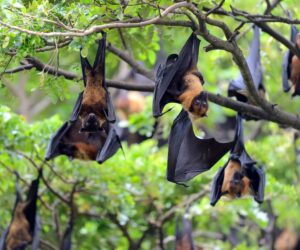
For a recurring bat problem or bats entering the structure, see our bat removal service in Chicago.
What If the Animal Is in the Attic?
An animal in the attic may not be visible at all.
Instead, homeowners often notice sounds before they see evidence of wildlife.
Common signs include:
- Scratching above the ceiling
- Running sounds
- Chewing
- Droppings
- Nesting material
- Damaged insulation
- Strong or unusual odors
- Damage around vents or roof openings
The timing of the noise can provide a clue, but it cannot identify the animal with certainty.
For example, daytime scratching could be associated with squirrels, while heavier nighttime movement could point toward raccoons or other nocturnal wildlife.
The important question is not only what animal is inside, but also how it got there.
An inspection can help identify the access point and determine whether exclusion or animal-proofing is needed after removal.
What If You Cannot Find the Animal?
This is a common situation.
You may hear an animal inside the wall or ceiling but have no idea where it is. Or you may see an animal enter a room and then lose sight of it.
Do not start opening walls, pulling apart insulation, or sealing every opening you can find.
Instead:
- Keep people and pets away from the suspected area.
- Listen for additional movement.
- Check accessible areas for obvious signs of activity.
- Avoid disturbing possible nests.
- Look for exterior entry points only when safe.
- Arrange a professional inspection if the animal cannot be located.
Trying to solve an inaccessible wildlife problem without knowing what is inside can result in an animal becoming trapped or the property being damaged.
What Not to Do When Wildlife Gets Inside
Don’t chase the animal
Chasing wildlife can cause it to move farther into the house or disappear into an inaccessible area.
Don’t try to grab it
Even a small wild animal may bite or scratch when frightened.
Don’t corner it
An animal that feels trapped may become defensive.
Don’t seal the entry point immediately
If an animal is still inside, sealing the opening can trap it in the structure.
This is especially important when there may be young animals inside an attic or wall.
Don’t use dangerous DIY methods
Avoid using chemicals, inappropriate traps, or other methods that could injure the animal or create additional risks inside your home.
When Is an Animal Inside the House an Emergency?
Not every wildlife sighting requires emergency service.
However, professional assistance becomes more important when:
- The animal is inside a bedroom or living area.
- A wild animal is acting aggressively.
- A bat has been in a room with someone who was sleeping.
- A person or pet may have been bitten or scratched.
- The animal is trapped or cannot find its way out.
- The animal is inside a wall, ceiling, chimney, or other inaccessible location.
- You suspect young animals are present.
- The animal has caused visible property damage.
- You cannot safely identify or remove it.
If there has been a potential bite, scratch, or other exposure, seek appropriate medical or public health guidance rather than relying only on wildlife removal advice.
Does Emergency Wildlife Removal Cost More?
The cost of removing an animal can depend on several factors.
For example, removing a squirrel from an accessible area may involve a very different amount of work from removing a raccoon from an attic or dealing with an animal inside a wall.
Factors that can affect the cost include:
- Type of animal
- Location of the animal
- Accessibility
- Difficulty of removal
- Whether young animals are present
- Property damage
- Entry-point repairs
- Animal-proofing or exclusion work
This is why there is not one fixed price for every wildlife emergency.
If you are trying to understand what affects the price before arranging service, read our guide to wildlife removal cost in Chicago.
What Happens After the Animal Is Removed?
Getting the animal out is only one part of solving the problem.
The next question should be:
How did the animal get inside?
Common entry points around Chicago homes include:
- Damaged soffits
- Loose fascia
- Roof gaps
- Attic vents
- Chimneys
- Unscreened openings
- Gaps around pipes and utility lines
- Damaged siding
- Crawl-space openings
- Gaps around doors or windows
If the opening remains accessible, another animal may eventually use the same route.
That is why professional wildlife removal may also involve inspecting entry points and recommending appropriate exclusion or animal-proofing.
For broader wildlife problems involving animals in attics, walls, garages, crawl spaces, or other parts of a Chicago property, see our animal removal services in Chicago.
How to Prevent Another Wildlife Emergency
After the immediate problem has been addressed, check the exterior of your home for potential access points.
Pay particular attention to:
- Roof and soffit damage
- Loose vents
- Chimney caps
- Gaps around utility lines
- Damaged screens
- Crawl-space openings
- Openings around the foundation
- Trees providing easy access to the roof
Keep garbage containers closed and avoid leaving pet food outside overnight.
If wildlife has already entered your home, prevention is especially important because the same opening may be used again.
Emergency Wildlife Removal in Chicago: When to Get Professional Help
An animal inside your home does not always mean you need an emergency response. But if the animal is trapped, aggressive, inaccessible, or creating a safety concern, trying to handle the situation yourself can make it worse.
The safest approach is to keep people and pets away, avoid direct contact, identify where the animal is if you can do so safely, and get professional help when necessary.
Help With Wildlife Problems in Chicago
For more than 50 years, Chicago’s Green Trappers has helped homeowners throughout Chicagoland with wildlife removal and animal-proofing needs. The family-owned and operated company has served the local area since 1972 and offers free inspections and a lifetime warranty on applicable services.
Whether you have a raccoon in the attic, a squirrel inside the house, a bat in a bedroom, or another wildlife problem, you can contact a wildlife removal professional in Chicago to discuss the situation and determine the appropriate next step.
Frequently Asked Questions
What should I do if a wild animal gets inside my house?
Keep children and pets away from the animal, avoid approaching it, and close interior doors when possible. Do not chase, corner, or attempt to physically handle the animal.
What should I do if I hear an animal in my attic at night?
Do not immediately assume the animal has left. Keep the area undisturbed and look for signs such as scratching, running, droppings, or damage. A professional inspection can help determine what animal is present and how it entered.
Can a raccoon inside my house be dangerous?
A frightened raccoon may defend itself if cornered or handled. Keep your distance and prevent children and pets from approaching it. Professional wildlife assistance may be appropriate when the animal cannot be safely contained.
What should I do if a squirrel gets inside my house?
Keep people and pets away and avoid chasing the squirrel. If it has moved into the attic or wall, do not seal the suspected entry point until you know the animal has left and whether young animals are present.
What should I do if a bat flies into my bedroom?
Do not touch the bat. Keep people and pets away and contact local public health or animal control for guidance if there may have been contact. CDC guidance emphasizes that bat bites can be difficult to detect.
How much does emergency wildlife removal cost in Chicago?
There is no single price for every wildlife situation. Cost can depend on the animal, its location, accessibility, removal difficulty, property damage, and any exclusion or animal-proofing work required. Our Chicago wildlife removal cost guide explains the main factors.
Does removing the animal prevent it from coming back?
Not necessarily. If the original entry point remains open, the same animal or another animal may enter again. Identifying and addressing access points is an important part of long-term wildlife prevention.
When should I call a wildlife removal professional?
Consider professional help when an animal is trapped, aggressive, inaccessible, inside a living area, suspected of having young nearby, or creating a situation you cannot safely manage yourself.